

General Motors (GM) has developed a new approach to tackle the challenges of autonomous driving. This involves using advanced AI technology to train autonomous systems at a speed and scale not possible in the real world.
AI explained
How does GM use AI and simulation for autonomous driving?
General Motors uses advanced AI combined with high-speed simulation to train autonomous driving systems. Their approach addresses rare and complex driving scenarios by running millions of simulated drives daily. They employ vision-language-action models and a hybrid "Dual Frequency VLA" model to improve vehicle perception and decision-making.
- Summary: GM’s scalable AI uses reinforcement learning and large simulations to train vehicles on rare events and complex traffic situations.
- Why it matters: This method enables faster and safer testing of autonomous systems beyond what is possible in real-world driving.
- Key point: Combining high-frequency reactions with deep semantic understanding helps vehicles respond quickly and accurately to diverse driving challenges.
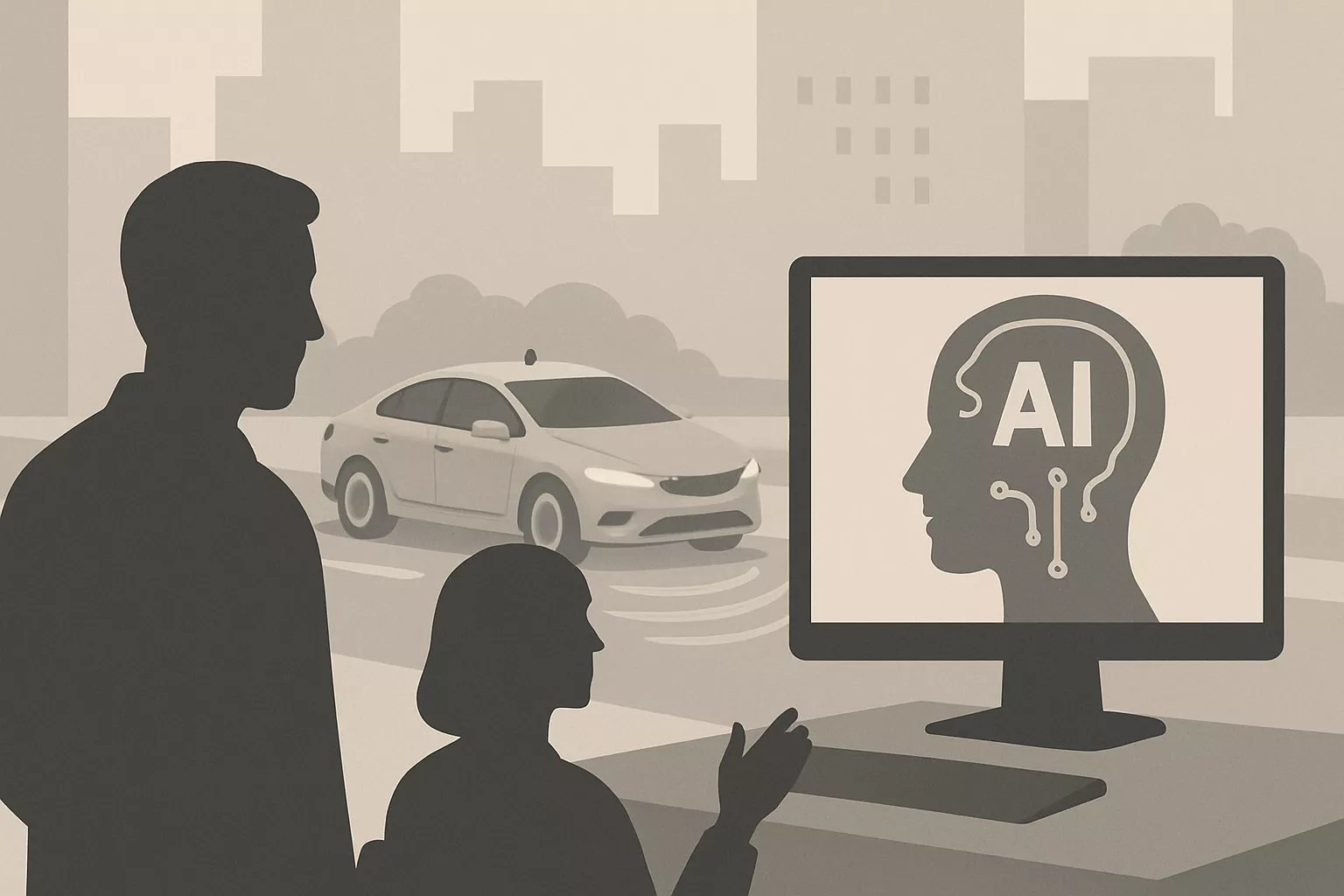
GM’s Scalable AI for Autonomous Driving Using High-Speed Simulation
GM is focusing on solving the so-called “long tail” problem in autonomous driving, where rare and unexpected events can impact safety. To achieve this, they combine large simulation environments, reinforcement learning, and vision-language-action (VLA) based models. This enables training systems in scenarios ranging from unexpected obstacles to complex traffic situations.
By using VLA models, GM’s vehicles can recognize and interpret hand signals from police officers or understand what a “loading zone” looks like. Additionally, they are developing a hybrid model called “Dual Frequency VLA” that combines high-frequency decision-making with deep semantic understanding. This allows vehicles to react quickly to hazards while comprehending complex traffic scenarios. GM runs millions of simulated drives every day, equivalent to tens of thousands of human driving days, to test systems against dangerous scenarios that are difficult to recreate in the real world.
Implications for the U.S. Autonomous Vehicle Market
GM’s scalable AI approach highlights the importance of high-speed simulation in advancing autonomous vehicle safety and reliability. For U.S. developers and companies, adopting similar simulation-driven training methods can accelerate testing and validation of AI systems, helping to bring safer autonomous vehicles to American roads faster. This innovation supports the broader goal of integrating autonomous technology into the U.S. transportation infrastructure.
Source: IEEE Spectrum
Read the full story in Norwegian
Les på norskRead also: Google Launches TurboQuant, New AI Memory Compression Technology